
We developbiogas and fertiliser plants - and deliver proprietary reactor technology to the industry
Through our Build-Own-Operate model, we take responsibility for the entire value chain. Working with local partners, we create circular solutions that generate green energy, produce biofertiliser and create jobs in local communities.
Developed in-house, Antec’s biogas reactor is designed to maximise efficiency, gas yield and resource utilisation.
About us
Local solutions backed by industrial expertise
Biomass
Circular solutions
Along with local suppliers, Antec is developing a strong, circular loop where resources are kept in circulation and given new life. For us, livestock manure, fish sludge and clean organic food waste are valuable bioresources that are converted into energy and new products.
Plant
Our selected facility
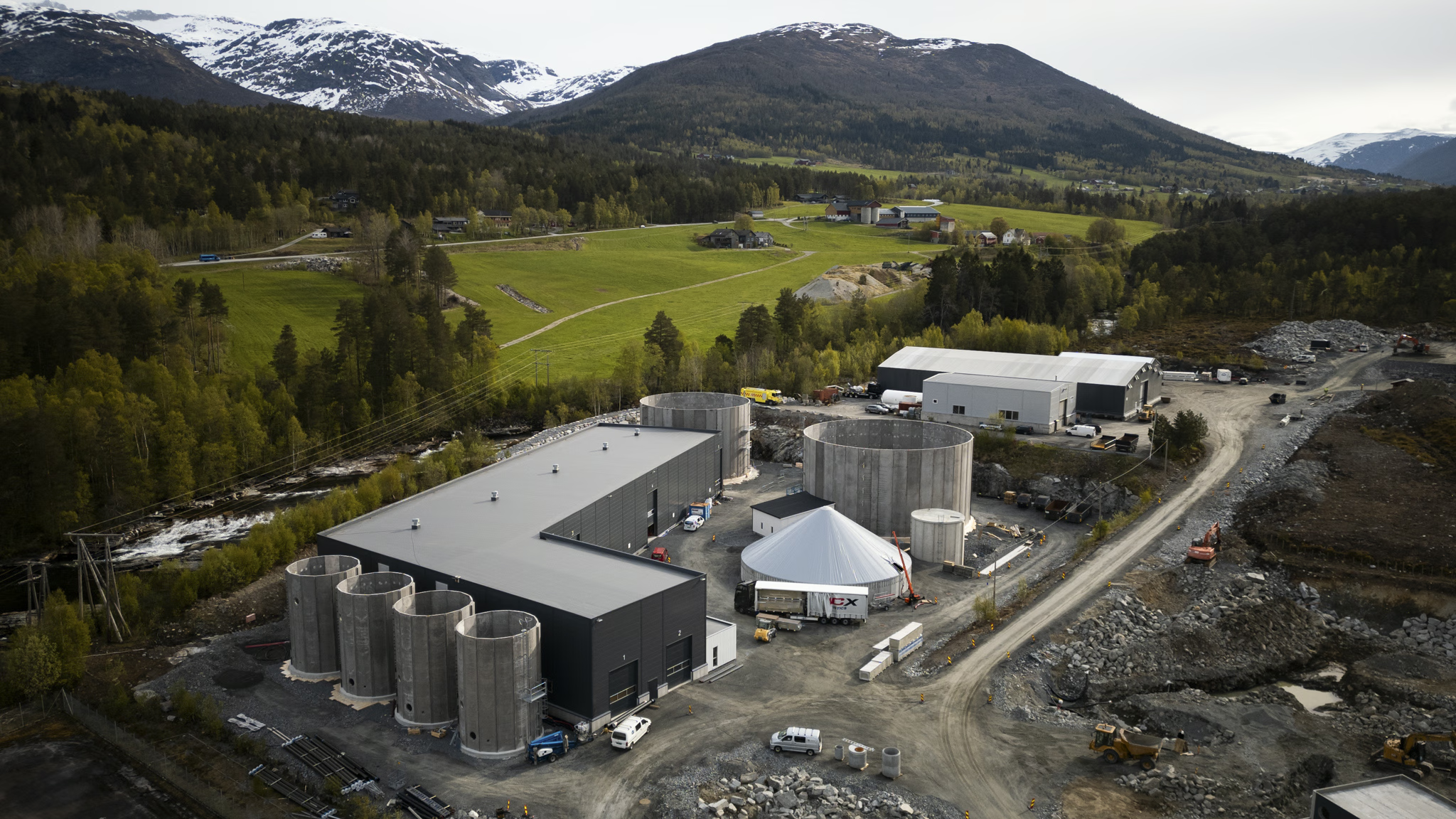
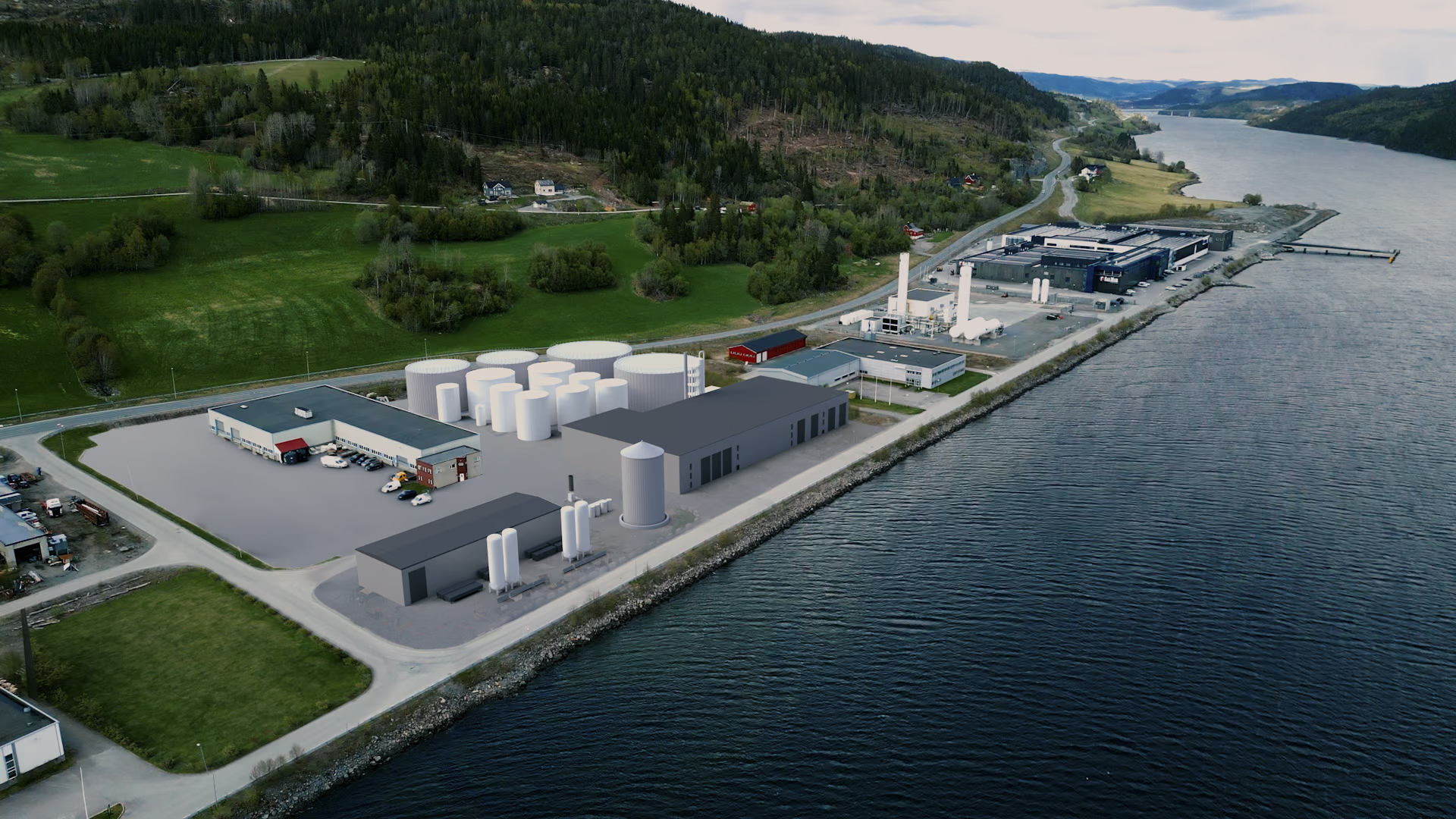
Overview of usual concepts
This is a very good resource for biogas production.
Farmers can deliver slurry to our facilities and receive in return nutrient-rich bio-fertiliser that improves yields, enhances soil quality and reduces the use of mineral fertilisers.
Food waste is one of the largest fractions in household and commercial waste, but instead of ending up as emissions or incineration, it can become a valuable resource. Organic food waste contains a high content of energy and nutrients, making it ideal for biogas production.
When food waste breaks down in an oxygen-free environment, biogas is formed – a renewable energy source that can be used for electricity, heat and fuel. At the same time, we get a by-product: digestate, which provides nutritious soil conditioning and reduces the need for artificial fertilisers.
Why is this important?
- Reduces greenhouse gas emissions by replacing fossil energy sources
- Closing the loop and creating a circular economy
- Provides local value creation and sustainable solutions
Precautions:
To ensure safe and efficient biogas production, food waste must be sorted correctly, free from plastic, metal and glass. It is pasteurised to eliminate bacteria and stored under controlled conditions to avoid odours and pests.
Organic food waste is not waste – it is a key to green energy and a more sustainable future.
If you have access to food waste, we would love to hear from you.
The aquaculture industry produces large quantities of fish sludge and fish silage, which are often regarded as waste. At Antec, we see this as a valuable resource. When these organic residual products are processed in our biogas plants, they are converted into renewable energy og digestate – a solution that both reduces the environmental impact and creates new value.
Our facilities accept:
- fish sludge from land-based facilities (dried to DM 20–25 %)
- fish silage from production by-products and dead fish
Why are fish sludge and fish silage ideal for biogas?
- They have a high content of organic matter, which provides good methane production.
- They help to utilise resources that would otherwise have gone to waste management.
- They are strengthening the circular economy in the aquaculture industry.
Benefits for the environment and business:
- Reduces greenhouse gas emissions from waste management.
- Does the aquaculture industry provide a sustainable solution for by-products?.
- Produces energy and biofertiliser that can be used locally.
At Antec, we combine technology and collaboration to turn aquaculture waste into part of the green energy solutions of the future.
Biogas is a renewable energy source that is formed when organic material, such as food waste, animal manure or fish ensilage, is broken down by microorganisms in an oxygen-free environment (anaerobic digestion). This process produces a gas mixture consisting mainly of methane (CH₄) and carbon dioxide (CO₂).
Methane can be used to generate electricity, heat or fuel, while the residual product – digestate – provides nutrient-rich soil improvement.
The entire process is part of nature's cycle and helps to reduce greenhouse gas emissions by replacing fossil energy sources.
Biomethane is upgraded biogas from which CO₂ and other impurities have been removed. It contains almost pure methane (≈ 97 %).
Bio-CO₂ is carbon dioxide captured from the upgrading of biogas, making it a renewable and climate-friendly resource. Instead of releasing CO₂ into the atmosphere, it is reused in the food and beverage industry, greenhouses, refrigeration and chemical processes. This contributes to the circular economy, reduces fossil emissions and supports sustainable production.
Digestate is a valuable by-product of biogas production. When organic material is broken down into biogas, we are left with a nutrient-rich mass that can be used for soil improvement and as high-quality fertiliser.
This fertiliser contains essential nutrients such as nitrogen, phosphorus and potassium – completely natural and without synthetic additives. By using bio-fertiliser in agriculture, we reduce the need for artificial fertilisers, close the nutrient loop and contribute to a more circular economy.
We take care of the logistics and offer solutions for digestate storage, where good cooperation between the biogas plant and the farmer ensures efficient operation and significant savings.
Shall we create the future energy solution together?
Do you have access to biomass or a desire to establish a biogas plant in your region? We are looking for local partners who want to transform manure and organic waste into green energy and biofertiliser. Get in touch for a no-obligation chat about how we can create circular value in your local area.